"Give me call and let's make the cattle business work for us."

Ted Slanker
Slanker's Grass-Fed Meats
Toll Free
866-SLANKER (752-6537)
Local
903-732-4653
Selling Before Their Time
August 27, 2003
Rushing to Sell Before the Cattle Price Increases
Cattlemen all over the nation are rushing to the sale barns to dump their calves. Should they?
As most of you know we raise and market grass-fed beef. We sell more beef than we can raise. That means we must buy grass-fed steers and heifers from other cattlemen. As our business grows, we will need an ever larger supply of grass-fed cattle. In most cases our pricing schedule for beef on the rail pays producers to hang onto their calves, keep them on grass and nothing but grass, and market them at 1,000 pounds or more. The current "high" market is no exception. Today we are paying $1.50 per pound hanging weight for steers and heifers!
But what if the market falls?
The concern for the market is probably why most folks don't want to hold onto their calves. The market has been so bad for so long that they can only imagine bad times and more bad times. Well, times do change and markets do cycle. The cattle market cycles with commodities generally. In constant dollars most commodity indexes peaked in 1974. Then they started falling and before they bottomed out they had collapsed 80%! That is a secular bear market.
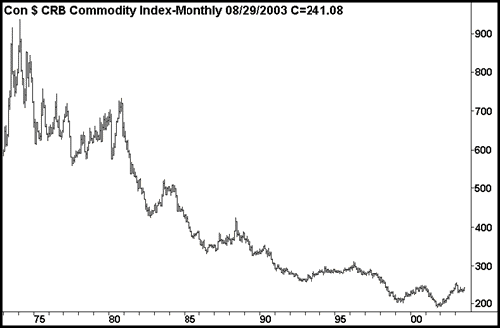
On the flip side there are secular bull markets. Commencing in the 1999 to 2001 period commodity markets started increasing. The increases have been modest but relentless. Now we are seeing breakouts in various commodities and cattle prices are one of them. I've included three constant dollar charts with this letter; the CRB Commodity Index (above), Live Cattle, and Feeders. As you can see prices are very depressed. But they have been reversing their downtrends and now all three of the charts are poised to move substantially higher in the years ahead.
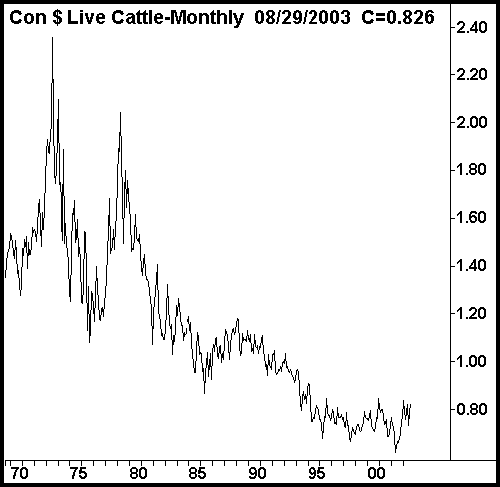
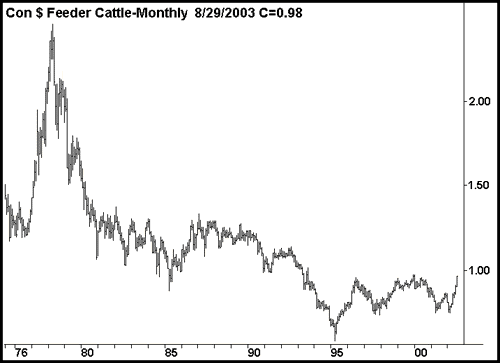
The new bull market in commodities has nothing to do with supply and demand. It has everything to do with relative values. Commodities are too cheap versus everything else; especially finished goods, stocks, bonds, and paper money. They got too low so now they are springing back and, before they're through, they'll get too high. Cattle are commodities. The cattle price has launched a secular bull market. For the next few years to a decade, cattle prices will increase. Holding on to growing cattle will in most cases pay a double bonus. Selling them as grass-fed can bring home a third bonus.
So it doesn't appear that this is a good time to sell your calves. Instead, this is a good time to raise cattle (that produce nutritionally superior beef) for the American consumer and reap our just rewards. This sounds like a major win win to me.
Here's the economics of selling on the rail versus selling 750-pound calves on today's market.
For the past 25 years the price of 750-pound Feeder Cattle has on average been 10% higher than the price of Live Cattle. If Live Cattle are $0.84, theoretically Feeders are: $0.92. We'll start here with our comparison and later on use the current premium-priced Feeder market.
Let's assume our grass-fed finished critter will weigh 1,050 pounds. We know Feeders weigh 750 pounds. At $0.92 our Feeder's theoretical value is: $693.00 before commission, yardage, and insurance. When we keep our Feeder on pasture it will grow on average about 1.5 pounds per day. So it will take 200 days to put 300 pounds on a feeder.
The average weight from feeder to finish is: 900 pounds. The critter eats 3% of its body weight per day of grass, which is 27 pounds. Over 200 days it will eat 5,400 pounds of grass. Assume grass in the pasture costs 1.5 cents per pound. The value of the grass consumed is $81.00. Let's add a management/risk fee of: $10.00. Consequently, our retained feeder calf must add a value of $91.00 for us to break-even with selling now.
At today's Live Cattle price the theoretical numbers are:
Feeder value is: $693.00
Retaining costs are: $91.00
Finished cost is: $784.00
Assume % hanging weight of live weight of:
|
52.50%
|
55.00%
|
57.50%
|
60.00%
|
Assumed finished weight is:
|
1050
|
1050
|
1050
|
1050
|
Hanging weight is:
|
551.25
|
577.5
|
603.75
|
630
|
Assume hanging weight price is:
|
$1.42
|
$1.42
|
$1.42
|
$1.42
|
Finished critter is worth:
|
$784.00
|
$821.33
|
$858.67
|
$896.00
|
Producer's feeding advantage is:
|
0
|
$37.33
|
$74.67
|
$112.00
|
Current feeder price is: $0.97, which is 15.48% higher than the Live Cattle price.
Gross feeder value is: $727.50
Feeding Costs are: $91.00
Feeding break-even is: $818.50
Assume % hanging weight of live weight is:
|
52.50%
|
55.00%
|
57.50%
|
60.00%
|
Assumed finished weight is:
|
1050
|
1050
|
1050
|
1050
|
Hanging weight is:
|
551.25
|
577.5
|
603.75
|
630
|
Assume hanging weight price is:
|
$1.48
|
$1.48
|
$1.48
|
$1.48
|
Finished critter is worth:
|
$818.50
|
$857.48
|
$896.45
|
$935.43
|
Producer's feeding advantage is:
|
0
|
$38.98
|
$77.95
|
$116.93
|
Now let's plug in Slanker's Grass-Fed Meats' current hanging weight price.
Assume % hanging weight of live weight is:
|
52.50%
|
55.00%
|
57.50%
|
60.00%
|
Assumed finished weight is:
|
1050
|
1050
|
1050
|
1050
|
Hanging weight is:
|
551.25
|
577.5
|
603.75
|
630
|
Slanker's G-F Meats hanging weight price is:
|
$1.50
|
$1.50
|
$1.50
|
$1.50
|
Finished critter is worth:
|
$826.88
|
$866.25
|
$905.63
|
$945.00
|
On today's market producer's advantage is:
|
$8.38
|
$47.75
|
$87.13
|
$126.50
|
Obviously, how well your cattle perform hanging on the rail makes a big impact on how much money you make retaining your Feeders. How efficient you are with your pastures also comes into play. In any case, these numbers are real and they indicate a substantial advantage to retaining feeders. In addition, the long-term constant dollar charts indicate that the bull market in cattle is very young. The upside potential is tremendous. The advantage today lies in holding on to cattle and in raising grass-fed beef for the American consumer. It's better for them. It's better for you.
We will be needing grass-fed cattle. Give me call and let's make the cattle business work for us.
Note: Our prices change with the markets. For more information on our protocol and more current pricing check out the Producer Page.
Ted Slanker
Slanker's Grass-Fed Meats
http://texasgrassfedbeef.com
866-SLANKER (752-6537) Toll Free
903-732-4653 Local
Copyright 2000-2014 © Ted E. Slanker, Jr., All rights reserved.